












Every AI brand was leaning into personality – mascots, soft shapes, the language of making the technology feel human. The assumption across the category was that this is what makes AI approachable. For AutogenAI’s blue-chip buyers, it had the opposite effect. As the business scaled past 170 people across global enterprise accounts, the brand needed to read as mature, composed and serious – the system its customers were trusting with their biggest bids.
AutogenAI had outgrown its own identity. What launched as a startup tool was now running across more than 170 people, multiple departments and a blue-chip global customer base. The early visual system, built for a far smaller team, had started to create friction — internally, where a growing team needed a shared framework to work from, and externally, where long enterprise sales cycles demanded a brand that signalled maturity rather than momentum. The natural growing pains of a business moving faster than its own identity could keep up with.
Reframe the brand to match the scale AutogenAI had reached. Premiumise how it looks, speaks and presents itself, move away from generic AI-tech visual language, and build a system that signals trust and reliability to a global, blue-chip audience across every touchpoint.
The whole AI category was racing toward the same place — mascots, friendly characters, soft shapes, the language of making the technology feel human and unintimidating. For AutogenAI’s actual buyers, the procurement leads and bid directors and CEOs signing off enterprise contracts, that language was working against the category. The category was infantilising itself, and AutogenAI’s buyers would trust them more for not joining in.
That reframed everything. The job wasn’t to add warmth, it was to lean into structure, precision and restraint — the qualities that read as enterprise-grade rather than enterprise-pretending. Composure over character. The brand had to be confident enough to be unshowy.
Underneath that sat a second problem the brief hadn’t named. One brand was speaking to three audiences with very different needs. Executives wanted confidence in results. Technical teams wanted depth and rigour. The bid writers themselves wanted reassurance and a sense of being empowered, not replaced. Left unframed, that complexity slowed everything — messaging, onboarding, the sales cycle itself.
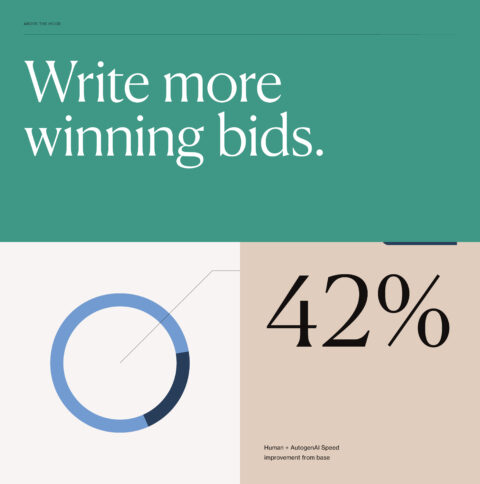
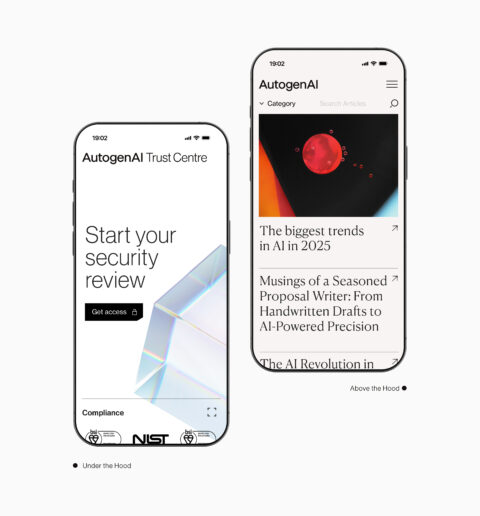
The organising principle that resolved both was Master the Win. Focus on the outcome, not the technology. It positioned AutogenAI as the platform that empowers professional bid writers to perform at their best, and gave the team a structural way to handle the three audiences: above the hood, the results and confidence executives need; below the hood, the engineering and logic technical buyers want. One brand, read three ways, depending on what matters to you.
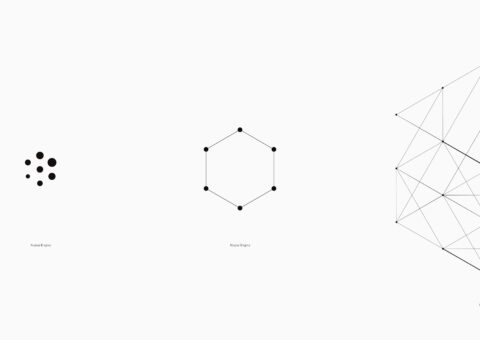
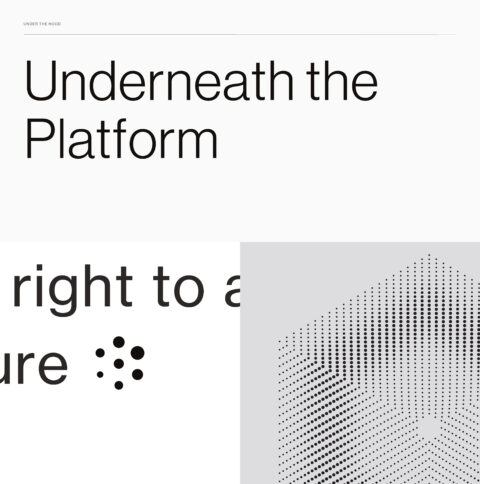
AutogenAI’s existing language engine — already part of the system — was kept, but given a role and a purpose. Enclosed, it became a cube: a single anchoring form that holds the whole system together while flexing across contexts. It appears as a technical construct for engineering audiences, a pictogram for quick recognition, a graphic device or window elsewhere. Always recognisably the same form, always carrying the same idea — the impact of the language model at the root of everything.
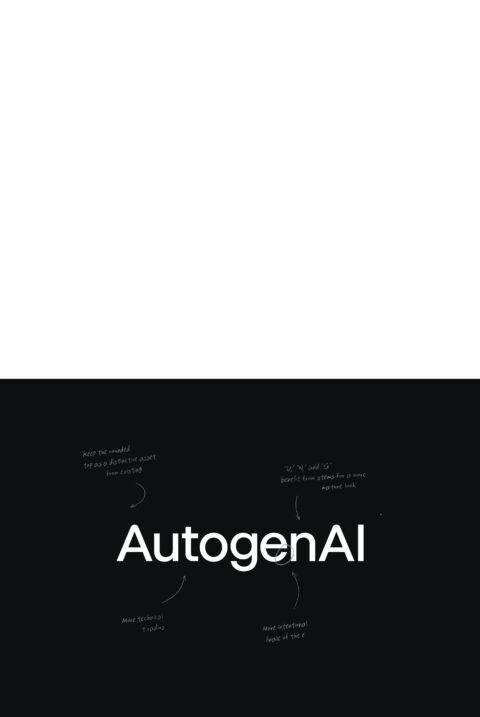
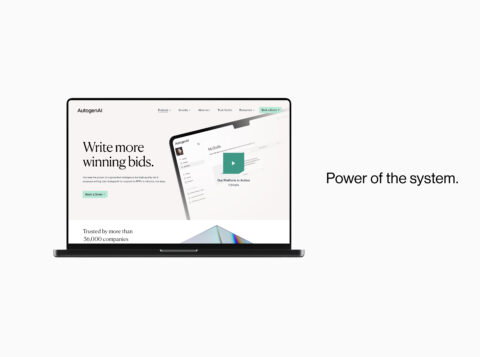
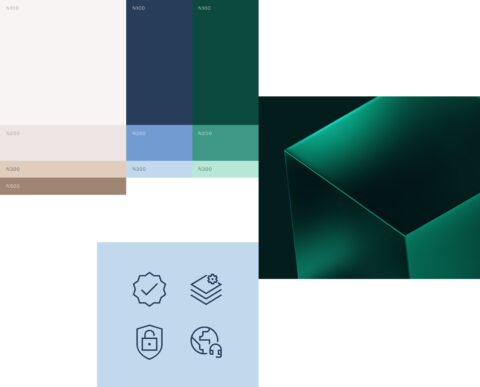
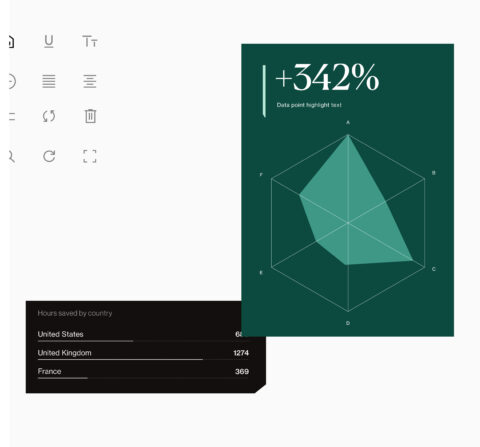
The wider system carried the maturity bet into every asset. An architectural typeface and a restrained, structured palette — built around authority, precision and trust rather than warmth — gave the brand the composure of the blue-chip world it was selling into. The result mirrors the discipline of professional writing itself. Rigorous, intelligent and structured, but flexible enough to scale across new audiences, products and markets without fragmenting.
The brand now matches the scale of the business it represents – enterprise-ready, and built to carry AutogenAI into US federal and global markets. One system speaks to three audiences, with executives, technical teams and end users each taking from it what matters to them, reducing friction across sales and onboarding. And the cube system is designed to absorb growth: as new products and markets are added, the brand strengthens rather than fractures.